

ATS Resume Guide
Resume ATS Compatibility: 7 Powerful Tips to Pass ATS
Resume ATS compatibility matters whenever you apply for jobs through online portals.
If you want a faster way to test your document, use the CVNexa ATS Resume Checker to review your resume before you apply.
What is resume ATS compatibility?
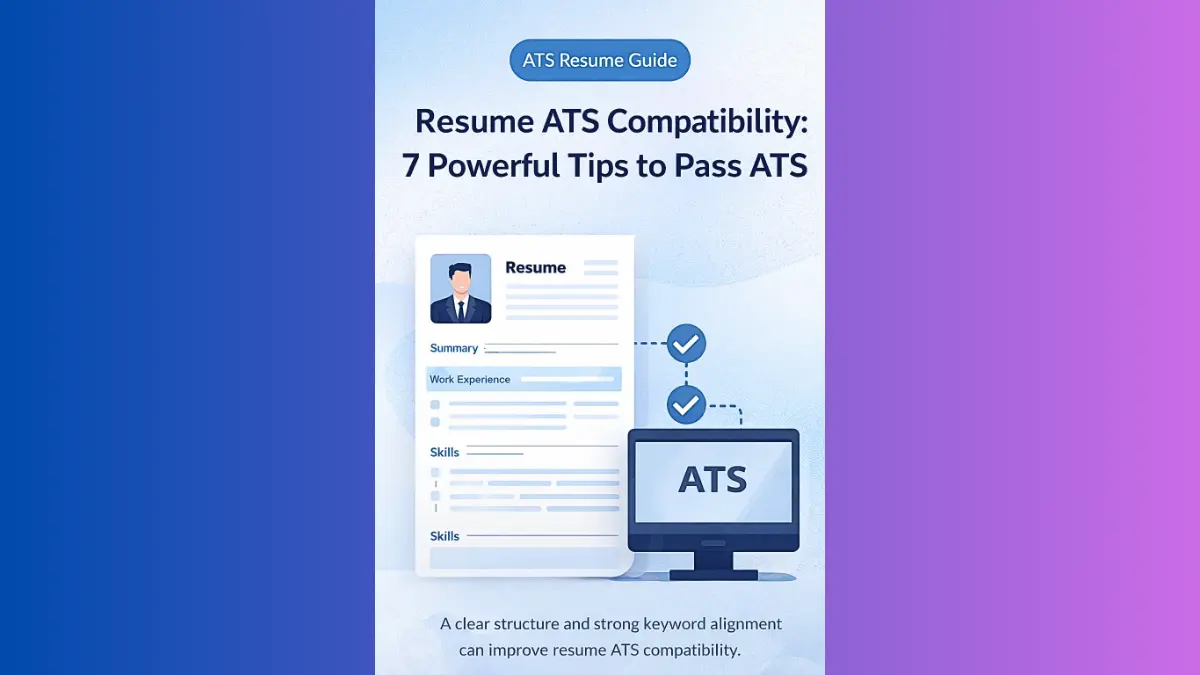
Resume ATS compatibility means your resume is easy for an applicant tracking system to scan, understand, and organize. Employers use ATS software to filter applications, detect relevant skills, and group candidates before manual review begins. A resume can look polished to a person but still perform poorly if the software cannot identify standard sections or relevant job language.
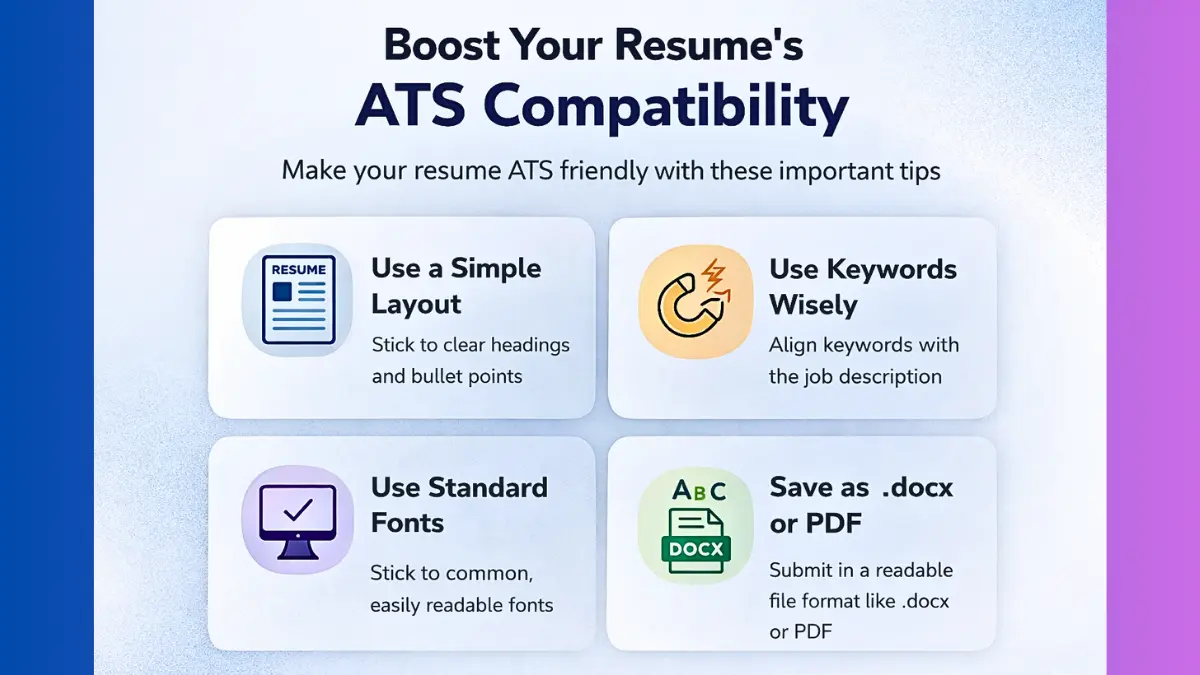
A strong ATS friendly resume usually includes standard headings such as Professional Summary, Work Experience, Education, and Skills. It also avoids formatting choices that may confuse software, including overly decorative layouts, text inside graphics, or inconsistent date formatting.
Why resume ATS compatibility matters for job seekers
Most job seekers focus on writing a better summary or adding more achievements, which is important, but readability also matters. If your document does not pass early screening, your experience may never be fully reviewed. That is why resume ATS compatibility is not just a technical detail. It is a core part of getting your application seen.
This is especially important for students, career changers, remote job applicants, and professionals applying through large company websites. In many cases, the first review of your application is done by software, not a recruiter.
How to check resume for ATS performance
The easiest way to check resume for ATS performance is to review your document as both software and a recruiter would. First, confirm that your resume uses clear section headings. Then review keyword alignment with the target role. After that, check formatting, contact details, dates, and bullet quality.
You can do this manually, but a dedicated ATS resume scanner makes the process faster. It can highlight weak sections, missing keywords, poor structure, and data-quality issues in one place.
7 powerful tips to improve resume ATS compatibility
1. Use standard section headings
ATS systems are more likely to understand common headings such as Summary, Work Experience, Education, Skills, Certifications, and Projects. Creative headings may look stylish, but they can reduce resume ATS compatibility if the system cannot classify them correctly.
2. Match keywords to the job description
One of the biggest reasons resumes underperform is weak keyword alignment. Read the target job description carefully and identify repeated terms related to skills, tools, responsibilities, and qualifications. Then include those terms naturally where they honestly match your experience. This improves both recruiter relevance and ATS resume test performance.
3. Keep formatting simple and readable
A clean layout is usually safer than a heavily designed one. Avoid text boxes, unusual columns, decorative icons, or important text placed inside images. If you need a practical starting point, browse CVNexa CV Templates and choose a clear format designed for readability.
4. Strengthen your bullet points
ATS software can detect keywords, but recruiters still evaluate value. Replace vague bullets with action-driven statements that show results, responsibility, or measurable improvement. For example, instead of saying “responsible for customer support,” explain what you handled, how you worked, and what improved.
5. Check contact details and dates carefully
A strong ATS friendly resume should have a readable email address, clean phone number, consistent location format, and clear employment dates. Small mistakes can make your resume appear incomplete or poorly structured.
6. Tailor your resume for each target role
Resume ATS compatibility improves when your document is tailored for the specific job you want. A software engineer, teacher, marketer, and customer service professional should not all use the same summary or skills emphasis. Tailoring helps your document reflect the employer’s language more accurately.
7. Run an ATS resume test before applying
Before sending your application, run a final ATS resume test to spot missing sections, low-value wording, or keyword gaps. This final check can help you avoid preventable issues and submit a stronger application with more confidence.
Common problems that hurt resume ATS compatibility
The most common problems are unclear headings, generic summaries, weak keyword coverage, inconsistent dates, broken links, and overdesigned layouts. Another major issue is using the same resume for every application without adapting it to the target role.
Resume ATS compatibility also suffers when applicants use broad claims without proof. A statement such as “excellent communication skills” becomes stronger when supported by examples from work, sales, customer support, teaching, or project coordination experience.
Tools that help improve resume ATS compatibility
If your document needs improvement, start with the CVNexa Resume Builder to create a cleaner structure. Then use the ATS Resume Checker to identify keyword, formatting, and content issues. After improving your resume, you can continue the workflow in the Cover Letter Generator to create a matching application letter.
It also helps to review broader resume guidance from CareerOneStop and role information from the Occupational Outlook Handbook. These resources can help you understand how employers describe skills, responsibilities, and qualifications.
Best workflow for better ATS results
A practical workflow for job seekers is:
Choose a template → Build resume → Check resume for ATS → Generate cover letter
This process helps you create a professional document, test resume ATS compatibility, and prepare a stronger overall application. It also keeps your resume and cover letter aligned for the same target role.
Frequently asked questions about resume ATS compatibility
What is a good way to test resume ATS compatibility?
A practical method is to use an ATS resume scanner that reviews formatting, section structure, keyword coverage, and content quality before you apply.
Can resume ATS compatibility guarantee interviews?
No. Good ATS performance improves your chances of passing early screening, but recruiters still assess relevance, achievements, and overall fit for the role.
Should I run an ATS resume test for every application?
Yes. Even small changes in job descriptions can affect which keywords and skills matter most, so checking each tailored version is a smart habit.
Test Your Resume with an ATS Resume Checker
After improving your resume formatting, keywords, and structure, the next step is to test how well your document performs in an applicant tracking system. Many job seekers think their resume is ATS friendly until they run a real ATS resume test.
You can check your resume instantly using the CVNexa ATS Resume Checker. The tool analyzes resume structure, keyword alignment, formatting issues, and content strength to help you understand how your resume might perform during automated screening.
Once you review your ATS score and improvement suggestions, you can update your resume and run another check to see how your score improves. This makes it easier to create a resume that is both readable for recruiters and compatible with modern ATS systems.